Introduction: Imperialism as Structural Necessity
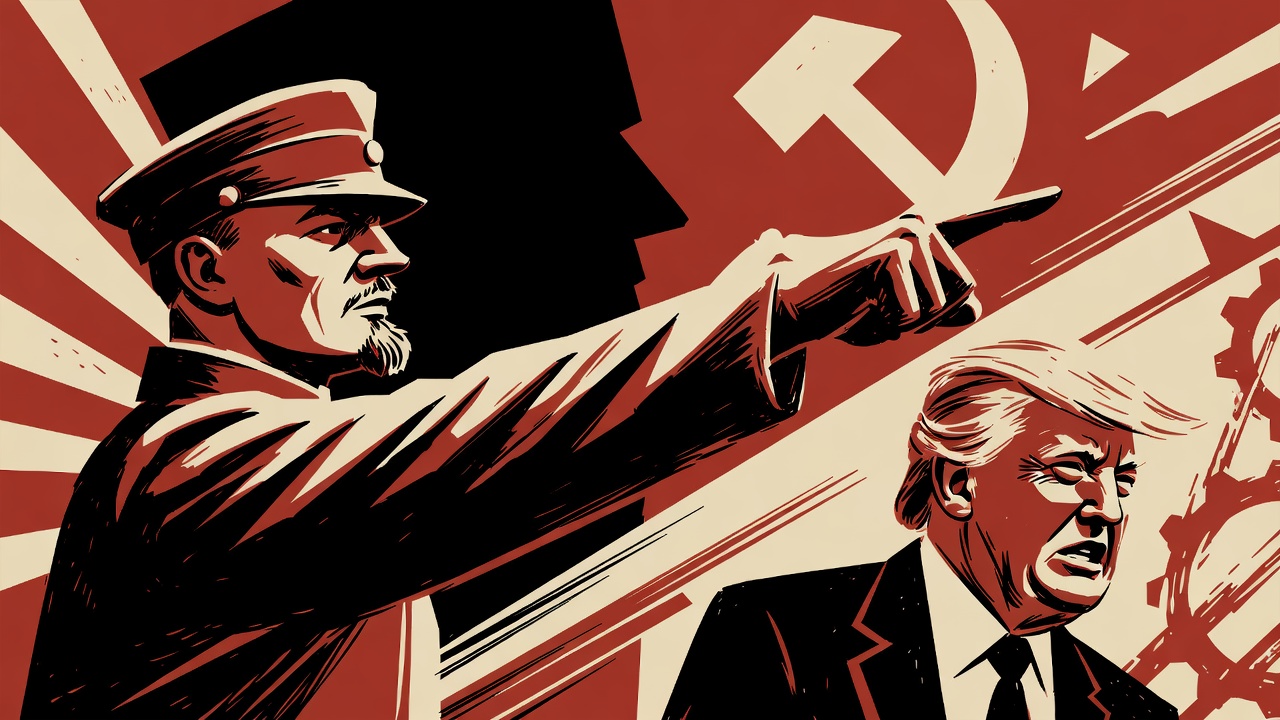
Venezuela bleeds while Imperialist President Donald Trump beats his chest like a dying gorilla. His , yet he postures as a strongman. This is not merely political theater but a manifestation of what Lenin identified as the highest stage of capitalism. In Imperialism, the Highest Stage of Capitalism (1916), Lenin argued: <blockquote>'Imperialism is the monopoly stage of capitalism, a stage which every developed capitalist country has reached or is approaching.'</blockquote> Trump's aggression isn't strength—it's the death rattle of a failing empire, exactly as Lenin predicted. His destruction of democratic institutions exposes the rot at the heart of the . Democrats and Republicans are two faces of the same monster, both implementing policies that serve monopoly capital.
Lenin's Theory Applied: Capitalist Decay and African Exploitation
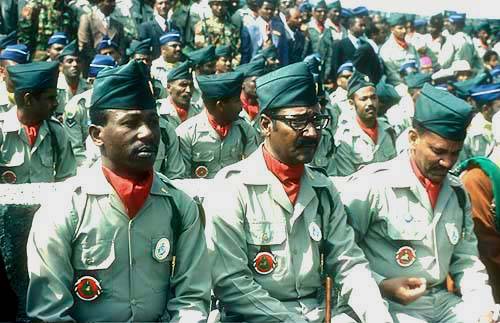
Lenin identified five essential features of imperialism: (1) concentration of production and capital leading to monopolies; (2) merging of bank and industrial capital creating finance capital; (3) export of capital rather than mere commodities; (4) formation of international capitalist monopolies; and (5) territorial division of the world among capitalist powers. We see these features clearly in Africa today. Western financial institutions like the IMF and World Bank—expressions of finance capital—impose structural adjustment programs that force African nations to privatize resources. This isn't accidental policy but a necessary outcome of what Lenin called <blockquote>'the export of capital, which has become particularly characteristic of the epoch of monopoly capital.'</blockquote> The truth cannot be hidden. The Western imperialist bloc knows its time is ending. France cannot survive without Africa's resources. Britain cannot exist without African wealth. The entire Western project is parasitic. This parasitism is not a moral failing but a structural necessity of capitalism in its monopoly stage.
Luxemburg's Accumulation Theory and African Resources
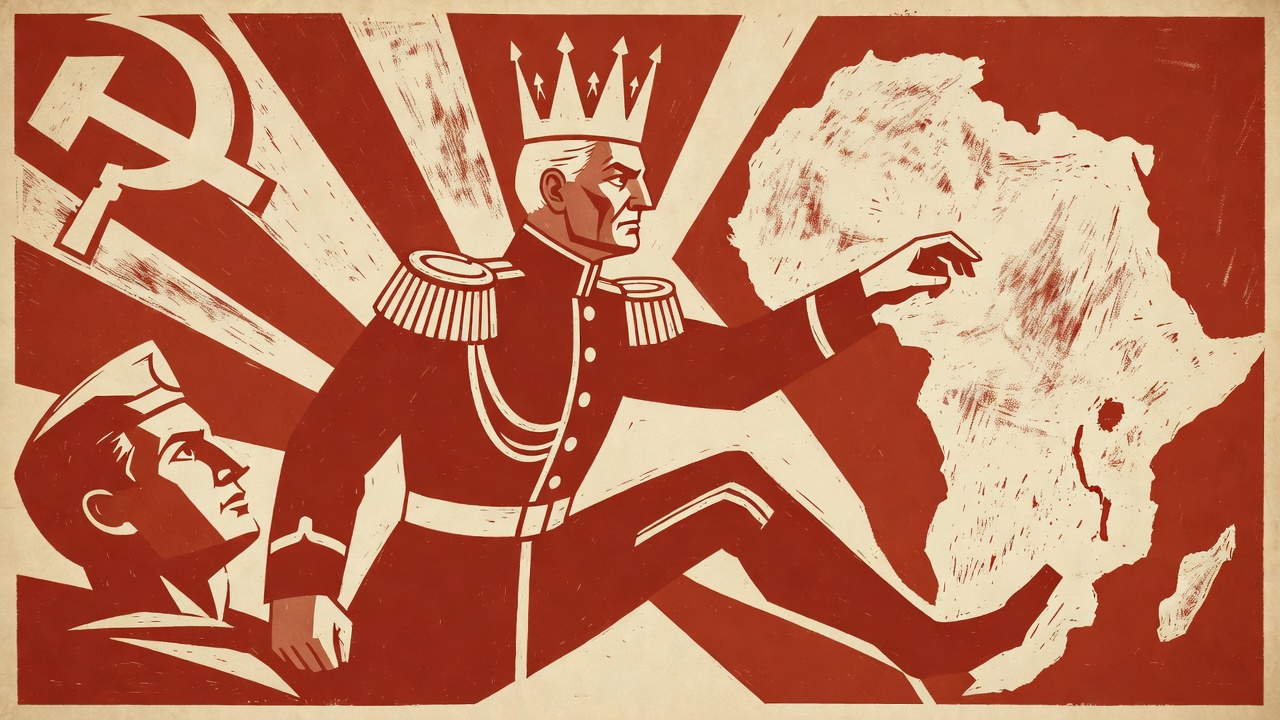
Rosa Luxemburg further developed this analysis in The Accumulation of Capital (1913), where she argued that capitalism requires non-capitalist external markets to absorb its surplus value and obtain raw materials. She wrote: <blockquote>'Capitalism needs non-capitalist social strata as a market for its surplus value, as a source of supply for its means of production and as a reservoir of labor power for its wage system.'</blockquote> Africa represents precisely this external market that Western capitalism desperately needs. While Africa—long portrayed as —remains rich and growing, it functions as the necessary external environment that Luxemburg identified. The exploitation of African resources and labor is not incidental to capitalism but essential to its survival. As Western capitalism enters its terminal crisis, this exploitation becomes more naked, vicious, and unapologetic.
Nkrumah's Neo-Colonialism: Imperialism's New Form
Kwame Nkrumah provided the most sophisticated analysis of how imperialism operates after formal decolonization. In Neo-Colonialism: The Last Stage of Imperialism (1965), he defined neo-colonialism as <blockquote>'the final stage of imperialism, in which the former colonial powers continue to control the newly independent states through economic rather than political means.'</blockquote> This perfectly describes Africa's situation today. The British governor became an IMF advisor. The French garrison became AFRICOM. The colonial charter became a loan agreement with interest that never sleeps. Flags changed, but chains remained—now refinanced and hidden in balance sheets. Nkrumah explained how this works: <blockquote>'The result of neo-colonialism is that foreign capital is used for the exploitation rather than for the development of the less developed parts of the world. The investment under neo-colonialism increases rather than decreases the gap between the rich and the poor countries of the world.'</blockquote> This is exactly what we see in Africa today—wealth extraction disguised as development assistance.
The Material Mechanisms of Contemporary Imperialism
The theoretical insights of Lenin, Luxemburg, and Nkrumah help us understand the concrete mechanisms of imperialism in Africa today. When nations nationalize resources, they face sanctions. When they refuse privatization, they're strangled by debt. Water sold back to people who once drank it freely. Electricity auctioned to the highest bidder. Hospitals turned into profit centers. Education transformed into lifelong debt. This is not mismanagement—it is designed extraction. And when economic coercion fails? The bombs return. Suddenly there's a failed state. Suddenly there's a terror threat. Suddenly humanitarian concern arrives on fighter jets. This pattern confirms Lenin's analysis that <blockquote>'the monopolies, which have grown out of free competition, do not eliminate the latter, but exist above it and alongside it, and thereby give rise to a series of very acute, intense antagonisms, frictions and conflicts.'</blockquote> The conflicts in Libya, Mali, Sudan, and elsewhere are manifestations of these antagonisms.
The Illusion of Democracy in Imperialist Systems
Today, imperialism wears a different mask. They speak of promoting good governance and fighting terrorism. Libya? Iraq? Somalia? Afghanistan? Syria? Yemen? Haiti? Vietnam? Chile? Guatemala? Congo? Iran? Panama? Grenada? Nicaragua? Honduras? El Salvador? Cambodia? Laos? Korea? Palestine? Lebanon? Sudan? South Sudan? Pakistan? Indonesia? East Timor? The Philippines? Colombia? Bolivia? Venezuela? Cuba? The list of victims grows endlessly. It was never about democracy or fighting terror—it was always about serving the tiny elite. The 1% who buy elections and own politicians create the illusion of choice between Kamala Harris and Donald Trump while both serve the same masters. You live in a fake democracy. And for those who support capitalism without capital—they don't give a damn about you. Elon Musk doesn't care about you. Jeff Bezos doesn't care about you. Mark Zuckerberg doesn't care about you. Bill Gates doesn't care about you. Warren Buffett doesn't care about you. Larry Fink doesn't care about you. Jamie Dimon doesn't care about you. Peter Thiel doesn't care about you. Larry Page doesn't care about you. Sergey Brin doesn't care about you. Michael Bloomberg doesn't care about you. Carlos Slim doesn't care about you. Mukesh Ambani doesn't care about you. Gautam Adani doesn't care about you. Bernard Arnault doesn't care about you. The Kochs don't care about you. Rupert Murdoch doesn't care about you.
Revolutionary Strategy: From Theory to Practice
We will not stand idle while this blood-soaked empire grinds the world into dust. We will not beg politely for mercy from systems that understand only force and contempt. We organize. We educate. We resist. We build the future they fear most. This is why we created The Peoples Tribune—free from big money, writing for the Working Class! By the Working Class! Know your enemy. Every comrade must understand the mechanisms of colonialism, not the sanitized versions taught in imperialist institutions but the raw, unvarnished truth. Knowledge is a weapon—that's why they make it prohibitively expensive.
Lenin, Luxemburg, and Nkrumah provided not just analysis but strategy. Lenin emphasized the need for a vanguard party to lead the proletariat. Luxemburg stressed the importance of mass spontaneous action. Nkrumah advocated for pan-African unity as a bulwark against imperialism. Combining these insights, we understand that resistance must be both organized and mass-based, both local and international. We organize. We educate. We resist. We build the future they fear most—a world beyond imperial domination. The first task of any serious movement is clarity. Imperialism survives not just through bombs and sanctions but through confusion. Every comrade must become a student of how this system actually works—not the sanitized fairy tales taught in imperial academies but the raw, material history of exploitation and resistance. Knowledge is not passive. Knowledge is a weapon. An educated revolutionary is more dangerous to empire than any missile.
International Solidarity Against Imperialism
Imperialism is global, so resistance must be global. There is no national solution to an international system of exploitation. Solidarity is not a hashtag or a slogan—it is a material necessity. The empire's greatest weapon has always been division. It teaches workers in the imperial core to fear immigrants rather than billionaires, to blame foreign labor rather than domestic exploitation, to wave flags while their futures are sold off. We must break this lie wherever it appears. The worker in Detroit has more in common with the garment worker in Bangladesh than with any CEO or politician. Police violence at home and military occupation abroad are not separate issues—they are expressions of the same system of control. When miners strike in South Africa, when Palestinians resist occupation, when Haiti is strangled by debt and intervention, these are not distant tragedies. They are fronts in the same class war. Real solidarity means material support, political defense, and coordinated action. It means opposing sanctions, exposing propaganda, demanding the closure of foreign military bases, and refusing to let imperial crimes be justified in our name.
Organizing Where We Stand
Imperialism is not something that exists only over there. It is embedded in our workplaces, our universities, our media, our city councils. The empire breathes through local institutions. That is why organizing must begin where we are. Not as isolated individuals but as disciplined, collective forces. This means building real organizations, not just online circles. Tenant unions that confront slumlords. Student movements that force universities to divest from war profiteers. Worker organizations that fight exploitation and racism together. It means defending immigrant and refugee communities who are living proof of imperialism's violence, providing real support and political protection, and making sanctuary a practice, not a slogan.
Conclusion: Beyond Empire
The imperialist machine will fall—not because it lacks weapons, but because it has lost the future. And when it does, we will not replace one empire with another. We will build a world based on solidarity, dignity, and shared abundance. Where Africa's wealth belongs to its people. Where the earth's resources serve humanity, not profit. Where the chains of exploitation are finally broken. As Lenin reminded us, <blockquote>'The proletarian revolution is impossible without the forcible destruction of the bourgeois state machine and the substitution for it of a new one.'</blockquote> The time for that substitution is coming.
Sources & References
Embedded Links
- [1]
- [2]
- [3]
- [4]
- [5]
References
- [1]
- [2] Books and theory on Marxism as anti-imperialist guide
By Revolutionary Communist Group
Publisher: Revolutionary Communist Group
- [3]
- [4] How Europe Underdeveloped Africa
By Walter Rodney
Published: 1972
Publisher: Marxists Internet Archive
- [5] Neo-Colonialism: The Last Stage of Imperialism
By Kwame Nkrumah
Published: 1965
Publisher: Marxists Internet Archive
- [6] Imperialism, the Highest Stage of Capitalism
By V.I. Lenin
Published: 1916
Publisher: Marxists Internet Archive
- [7]